

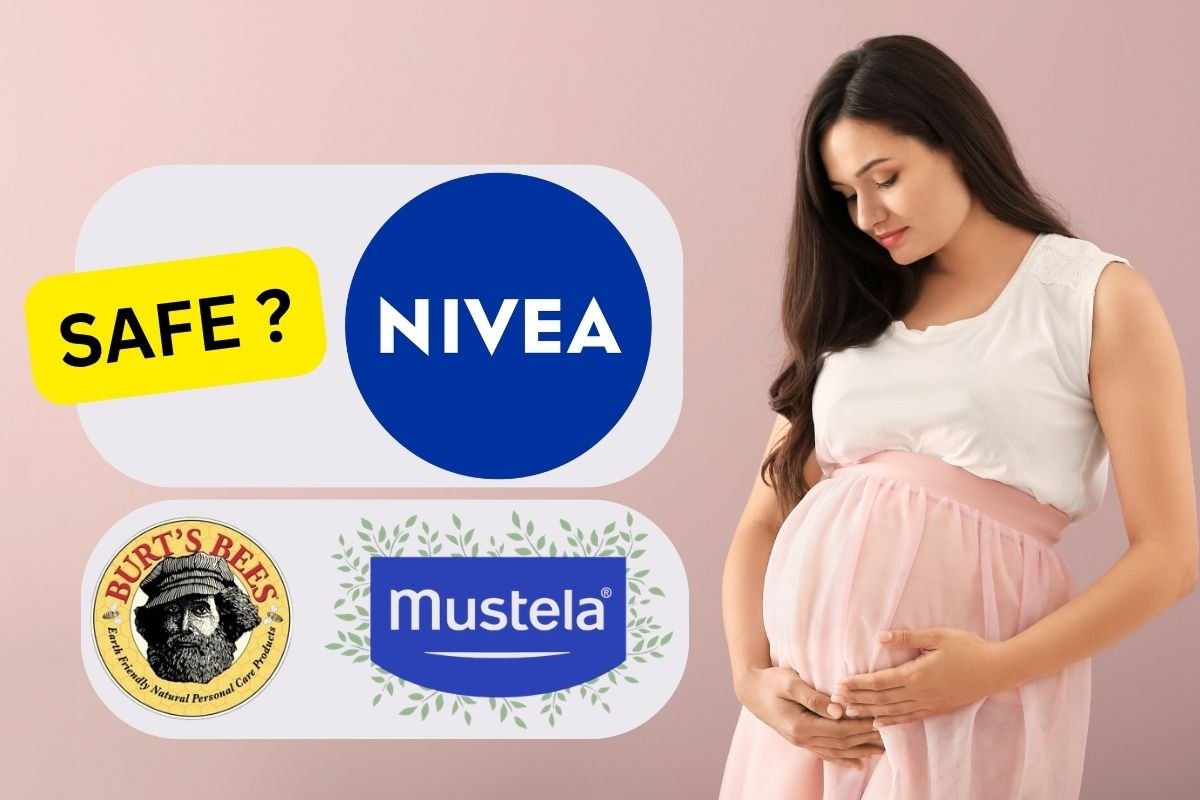
Pregnancy can make even a familiar skincare routine feel complicated. Ingredients that seemed completely ordinary before pregnancy may suddenly raise questions, especially when comparing everyday brands such as NIVEA and Burt’s Bees with pregnancy-focused skincare from Mustela. The important point is that pregnancy safety usually depends more on the individual formula and its ingredients than on the brand name alone.
If you have been searching, “i’m a pregnant woman. are nivea products safe compared to burt’s bees or mustela?”, the short answer is that many ordinary moisturising products can be appropriate during pregnancy, but every product should still be checked individually.
Are NIVEA products safe during pregnancy?
NIVEA states that its cosmetic products undergo safety and skin-compatibility evaluations before being introduced to the market and considers its cosmetic products suitable for pregnant and breastfeeding women. The company also recommends speaking with a GP or midwife when individual health circumstances create concerns.
That does not mean every NIVEA product is automatically the right choice for every pregnant woman. NIVEA has a very large range, including moisturisers, facial treatments, cleansers, sunscreens and products containing specialised active ingredients. The ingredient list of the exact product matters.
For a simple body lotion, cream or gentle cleanser, the main purpose is usually hydration and maintaining the skin barrier. These types of products are generally less concerning than treatments containing strong active ingredients.
I’m a pregnant woman. Are NIVEA products safe compared to Burt’s Bees or Mustela?
When asking, “i’m a pregnant woman. are nivea products safe compared to burt’s bees or mustela?”, it is tempting to choose the brand that markets itself most strongly toward pregnancy. However, branding alone is not a reliable safety test.
Mustela has a dedicated maternity range specifically formulated for pregnancy and postpartum use. Its Essential Care lotion, for example, is described by the company as suitable throughout pregnancy and after childbirth, with 99.8% ingredients of natural origin.
Mustela also says its maternity skincare products are designed with pregnancy and breastfeeding in mind and undergo safety evaluation involving an independent toxicology expert.
This gives Mustela an obvious advantage if your priority is choosing a product specifically designed around maternity skincare. But it does not automatically mean a regular NIVEA moisturiser is unsafe.
How does Burt’s Bees compare?
Burt’s Bees has many products based around naturally derived ingredients, but “natural” should not automatically be interpreted as “safer during pregnancy.” A natural ingredient can still cause irritation or an allergic reaction, and pregnancy can make some people’s skin more sensitive.
The better approach is to check the complete ingredient list of the particular Burt’s Bees product you want to use. A basic moisturiser is a very different category from a concentrated treatment, exfoliant or facial active.
This is particularly important when answering “i’m a pregnant woman. are nivea products safe compared to burt’s bees or mustela?” because the three brands have different product categories and formulas.
Which skincare ingredients deserve extra attention?
The American College of Obstetricians and Gynecologists says several over-the-counter ingredients can be used during pregnancy, including topical benzoyl peroxide, azelaic acid, topical salicylic acid and glycolic acid. It specifically recommends avoiding topical retinoids during pregnancy.
The American Academy of Dermatology also advises avoiding ingredients such as hydroquinone during pregnancy and recommends discussing certain ingredients with a dermatologist because pregnancy safety information can be limited.
Retinoids are particularly important. They can appear under names such as retinol, tretinoin, adapalene or other vitamin-A-related terms. If you are pregnant, do not assume that a product is appropriate simply because it is sold over the counter. ACOG recommends avoiding topical retinoids during pregnancy.
What about salicylic acid during pregnancy?
Salicylic acid often causes unnecessary confusion. ACOG lists topical salicylic acid among OTC ingredients that can be used during pregnancy.
However, concentration and the way a product is used still matter. The American Academy of Dermatology recommends limiting high-dose salicylic acid, particularly concentrations above 2%, during pregnancy.
Therefore, if a NIVEA, Burt’s Bees or Mustela product contains salicylic acid, look at the exact formulation rather than judging the entire brand.
Is Mustela better because it is made for pregnancy?
Mustela has a strong advantage in this particular comparison because it offers a dedicated maternity collection. Its stretch-mark cream, for example, is designed for use from the first month of pregnancy and can also be used while breastfeeding.
Its maternity products also focus heavily on moisturising and supporting the skin during physical changes associated with pregnancy.
That makes Mustela a convenient choice for someone who wants a pregnancy-specific routine. It does not necessarily mean you need to replace every existing moisturiser with Mustela.
Can NIVEA moisturisers help with pregnancy skin?
Yes. Pregnancy can cause dryness, tightness and itching as the body and skin change. NIVEA recommends regular moisturising and specifically discusses ingredients such as shea butter, vitamin E and hyaluronic acid as useful moisturising ingredients during pregnancy.
NIVEA also specifically identifies its Q10 Firming Body Oil as suitable for massaging the belly during pregnancy.
Still, moisturisers should not be viewed as guaranteed prevention for stretch marks. Genetics, skin characteristics and the degree of stretching all influence whether stretch marks develop.
What is the safest way to choose between the three?
If you are asking, “i’m a pregnant woman. are nivea products safe compared to burt’s bees or mustela?”, think about the product rather than simply the label.
For everyday hydration, a straightforward NIVEA, Burt’s Bees or Mustela moisturiser may be a reasonable option if its ingredients are appropriate for you.
For a pregnancy-specific body-care routine, Mustela may be more convenient because its maternity products are specifically designed for expectant mothers.
For Burt’s Bees, examine the individual formula rather than relying on the word “natural.”
For NIVEA, check the exact product because the brand has a very broad range, from basic body moisturisers to specialised facial treatments.
A simple pregnancy skincare routine
A simple routine is often easier to manage during pregnancy. Start with a gentle cleanser, followed by a plain moisturiser that your skin tolerates well. During the day, use appropriate sun protection, particularly if pregnancy-related pigmentation is a concern.
Avoid adding several new active products at once. If your skin becomes irritated, stop the newest product and speak with a healthcare professional if the reaction is significant.
Most importantly, do not feel that you need an expensive pregnancy-only skincare collection simply because you are pregnant. A well-tolerated, uncomplicated moisturiser can be perfectly practical.
What should you do before using a new product?
Read the current ingredient list on the packaging because cosmetic formulas can change. If you have a prescription skincare product, significant skin condition, allergy history or concerns about a particular ingredient, ask your obstetrician, midwife, dermatologist or pharmacist.
If you are still wondering, “i’m a pregnant woman. are nivea products safe compared to burt’s bees or mustela?”, take the exact product name and ingredient list to your healthcare professional. That is much more useful than comparing brands in general.
Conclusion
The question “i’m a pregnant woman. are nivea products safe compared to burt’s bees or mustela?” does not have a single brand-based answer. Many basic moisturising products from established skincare brands can be appropriate during pregnancy, while some specialised formulas require closer attention to their ingredients.
NIVEA says its cosmetics are considered safe for pregnancy, Mustela offers products specifically developed for maternity care, and Burt’s Bees should be assessed product by product. The safest strategy is simple: read the ingredient list, avoid pregnancy-inappropriate actives such as topical retinoids, and ask your healthcare professional when you are uncertain.
During pregnancy, skincare does not have to be complicated. A gentle cleanser, a well-tolerated moisturiser and sensible sun protection can often provide the foundation for a comfortable routine.
Frequently Asked Questions
Is NIVEA safe to use during pregnancy?
NIVEA states that its cosmetic products are evaluated for safety and are considered suitable for pregnant and breastfeeding women. Individual formulas should still be checked.
Is Mustela safer than NIVEA during pregnancy?
Mustela has products specifically designed for pregnancy, but that does not automatically make every NIVEA product unsafe. The ingredients and intended use are more important than the brand.
Can I use Burt’s Bees while pregnant?
Many basic skincare products may be suitable, but check the ingredients of the specific product. Natural or plant-derived ingredients are not automatically suitable for everyone.
Which skincare ingredient should pregnant women avoid most carefully?
Retinoids are among the most important ingredients to avoid during pregnancy. ACOG recommends avoiding topical retinoids while pregnant.
Should I ask my doctor before changing skincare during pregnancy?
Yes, particularly if you are using treatment products, prescription skincare or an ingredient about which pregnancy safety is uncertain. Your obstetrician or dermatologist can consider your individual circumstances.